

Understanding Property Tax Disputes in Ohio: What Property Owners Should Know
Ohio property tax disputes arise when property owners challenge their assessed values and face opposition from school districts. If you received a notice that your property value increased, or if you believe your property is overvalued, you have the right to challenge that valuation. However, understanding Ohio property tax disputes is essential before filing because school districts can actively oppose your challenge and, in some cases, try to increase your property value even further. This guide explains how the process works and what risks you face before the March 31 deadline.
This article is based on content that originally appeared in the Cleveland Jewish News in January 2026, adapted for property owners.
Are you a legal or tax professional? Read the technical version of this article written for practitioners.
How Ohio Property Tax Disputes Begin
Ohio counties must reappraise all properties every six years. Between those full reappraisals, counties update property values every three years based on market conditions. In Cuyahoga County, the Fiscal Officer handles these valuations, and the most recent reappraisal was completed for tax year 2024 with taxes payable in 2025.
Your property taxes are calculated directly from your property’s assessed value. A higher value means higher taxes, and a lower value means lower taxes. The county assumes its valuation is correct unless you challenge it.
If you believe your property is overvalued, Ohio law gives you the right to file a complaint with your county board of revision. This board includes representatives from the Fiscal Officer, Treasurer, and Commissioner offices. They will hold a hearing where you must present evidence proving your property is worth less than the county says it is.
What Evidence You Need
To successfully challenge your property value, you need solid evidence. The board of revision will not lower your value just because you think it is too high. You must prove it with documentation.
Acceptable evidence includes a professional appraisal report showing a lower value, proof of a recent sale price if you just bought the property, or actual construction costs if the property is new. The stronger your evidence, the better your chances of success.
If the board of revision denies your complaint or does not reduce your value enough, you can appeal to the Ohio State Board of Tax Appeals or to your county’s court of common pleas.
School Districts in Ohio Property Tax Disputes
This is the part many property owners do not expect. In Ohio, school districts can participate in your property tax complaint as your opponent.
School districts receive approximately 70% of property tax revenue to fund their operations. Because of this heavy reliance on property taxes, Ohio law allows school districts to get involved when property owners challenge their valuations. The school district will hire attorneys to argue against your complaint and fight to keep your property value as high as possible.
In some cases, school districts may even file their own complaint trying to increase your property value above what the county assessed. While recent changes to Ohio law, including House Bill 126 and House Bill 96, have placed some restrictions on when school districts can do this, they remain very active in opposing property owner complaints.
This means that when you file a complaint, you are not just challenging the county’s number. You are going up against the school district’s legal team, which has a financial interest in keeping your taxes high.
Understanding Property Tax Disputes Before You File
Because school districts will oppose your complaint, you need to think carefully about whether filing makes sense for your situation.
Weak evidence can backfire. If you file a complaint without strong proof that your value is too high, the school district will likely defeat your claim. You will have spent time and money for no result.
School districts may counter-attack. Even though new laws limit their ability to seek increases, school districts can still argue that your property is actually worth more than the county said. If they succeed, your taxes could go up instead of down.
Appeals cost money. You may need to pay for a professional appraisal, which can cost several thousand dollars. You may also need to hire an attorney to represent you at the hearing. These costs must be weighed against your potential tax savings.
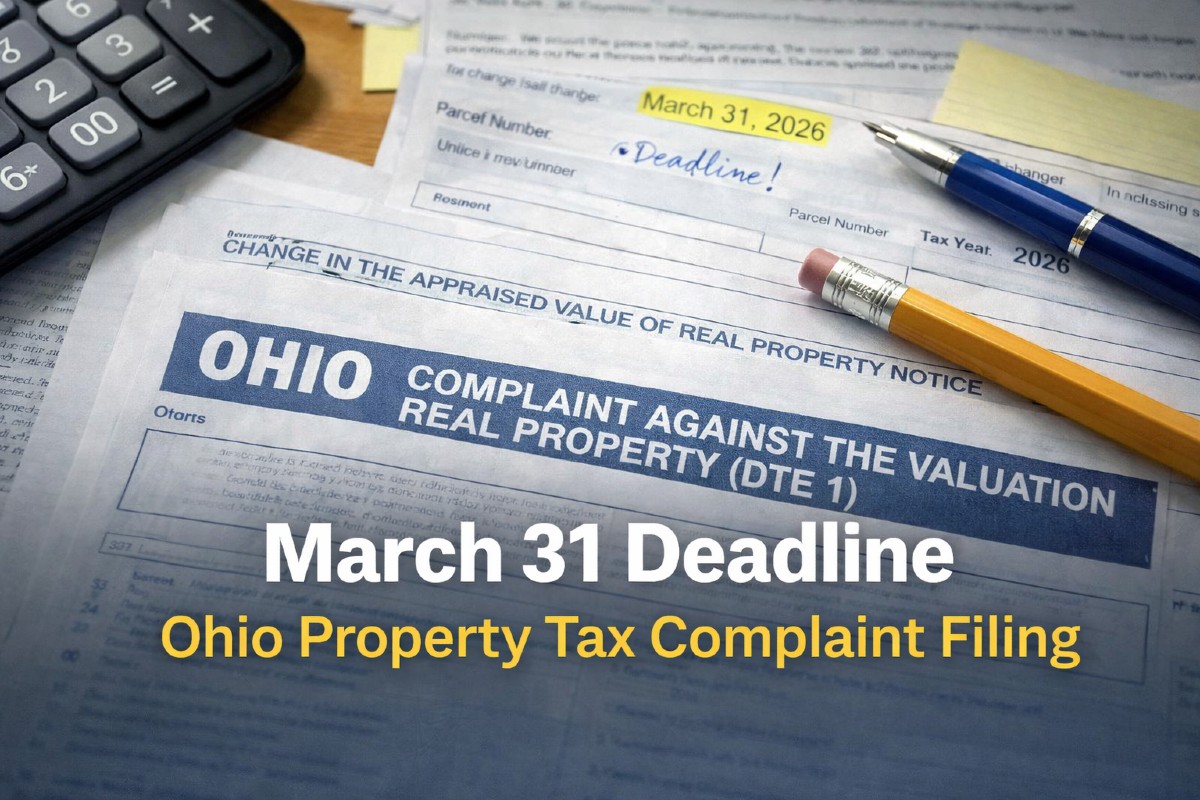
The deadline is firm. You must file your complaint by March 31, 2026. If you miss this deadline, you cannot challenge your value for this tax year. You would have to wait until the next update or reappraisal cycle.
Making the Decision
Not every property owner should file a complaint. If your property value seems reasonable compared to similar properties, or if you do not have strong evidence to support a lower value, filing may not be worth the cost and risk.
However, if you have clear evidence that your property is overvalued—such as a recent professional appraisal, comparable sales showing lower values, or specific property issues that reduce value—filing a complaint may result in significant tax savings.
Before deciding, consider consulting with a property tax attorney who can review your evidence, evaluate your chances of success, and help you understand the risks. Professional guidance can help you avoid costly mistakes and improve your outcome if you do file.
The March 31 deadline is approaching quickly. If you are considering a challenge, act soon to preserve your appeal rights.
About the Author
Robert “Kip” Danzinger is a property tax attorney based in Cleveland, Ohio. The attorneys at Sleggs, Danzinger & Gill, Co., LPA have over 100 combined years of real estate tax law experience and have been reducing real property tax assessments throughout Ohio and across the United States as a team since 2005.